
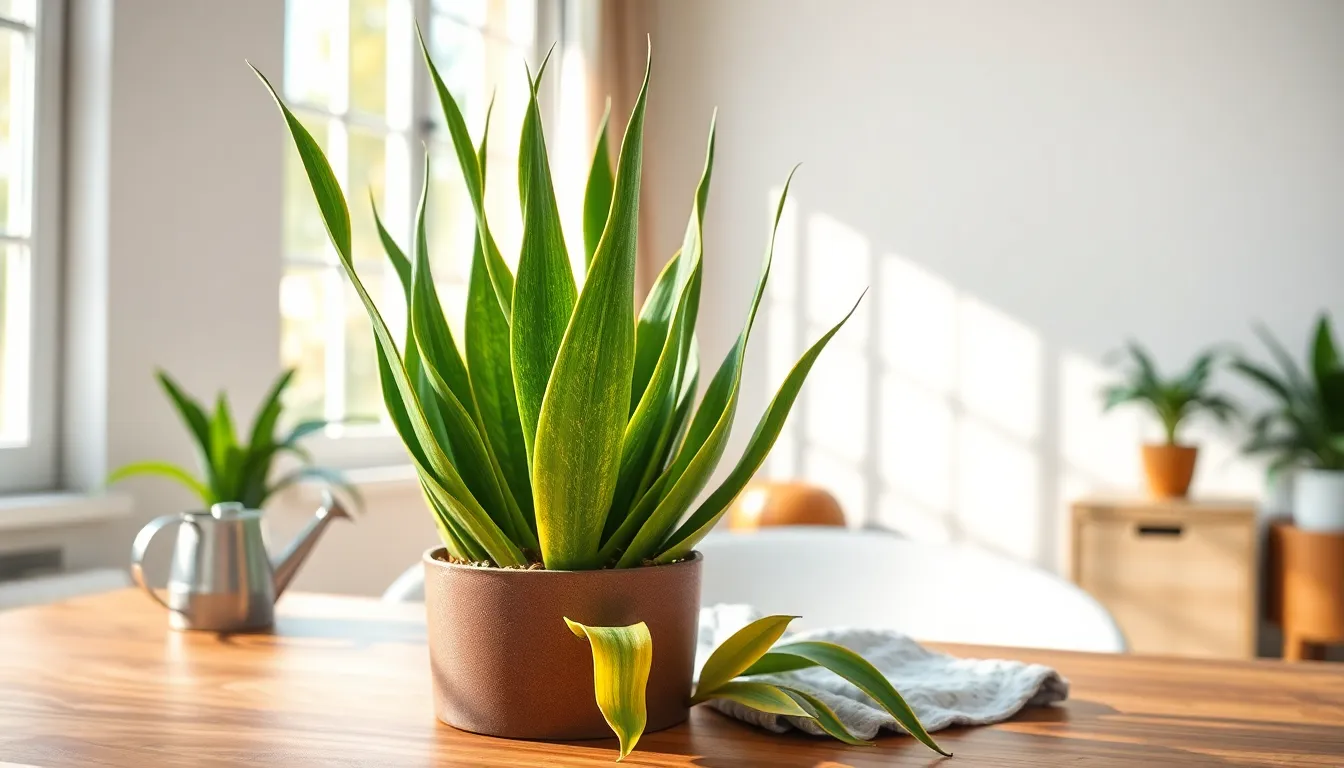

Snake plants are the low-maintenance darlings of the houseplant world, but even they can fall victim to a few pesky diseases. If you’ve ever found yourself staring at a wilting leaf or a suspicious spot, you know the panic that sets in. Fear not! This guide dives into the world of snake plant diseases, complete with pictures that’ll help you identify what’s plaguing your green friend faster than you can say “photosynthesis.”
From the dreaded root rot to the sneaky mealybugs, knowing what to look for can save your beloved plant from an untimely demise. With a little humor and a lot of helpful visuals, this article ensures you’ll be well-equipped to tackle any issue. So grab your detective hat and get ready to become the Sherlock Holmes of snake plants! Your leafy companion will thank you—or at least stop sulking in the corner.
Snake Plant Diseases Picture
Snake plants, or Sansevieria, can encounter various diseases and pests that hinder their growth. Root rot stands out as a critical issue. Poor drainage and overwatering significantly contribute to this problem. Signs of root rot include yellowing leaves and a mushy base.
Mealybugs present another common threat. These pests appear as white cottony masses on leaves and stems. Infestations can lead to stunted growth and leaf drop. Regular inspection helps catch these pests early, making treatment more manageable.
Fungal infections also pose risks. Leaf spot diseases manifest as brown or black lesions on foliage. These spots typically result from excess moisture and poor air circulation. Implementing a watering schedule promotes healthy growth and reduces the risk of fungus.
In addition to these problems, snake plants can suffer from sunburn. Direct sunlight can scorch the leaves, causing brown edges and discoloration. Moving a plant to a shadier location often alleviates this issue and restores its health.
Identifying these diseases early enhances management strategies. Monitoring environmental conditions, such as humidity and light levels, creates a favorable setting for snake plants. Knowing the symptoms associated with each issue enables effective action, ensuring a healthy, thriving plant.
Common Snake Plant Diseases
Several diseases can affect snake plants, and recognizing them promptly ensures effective management. Identifying problems early can significantly improve plant health.
Identification Through Pictures
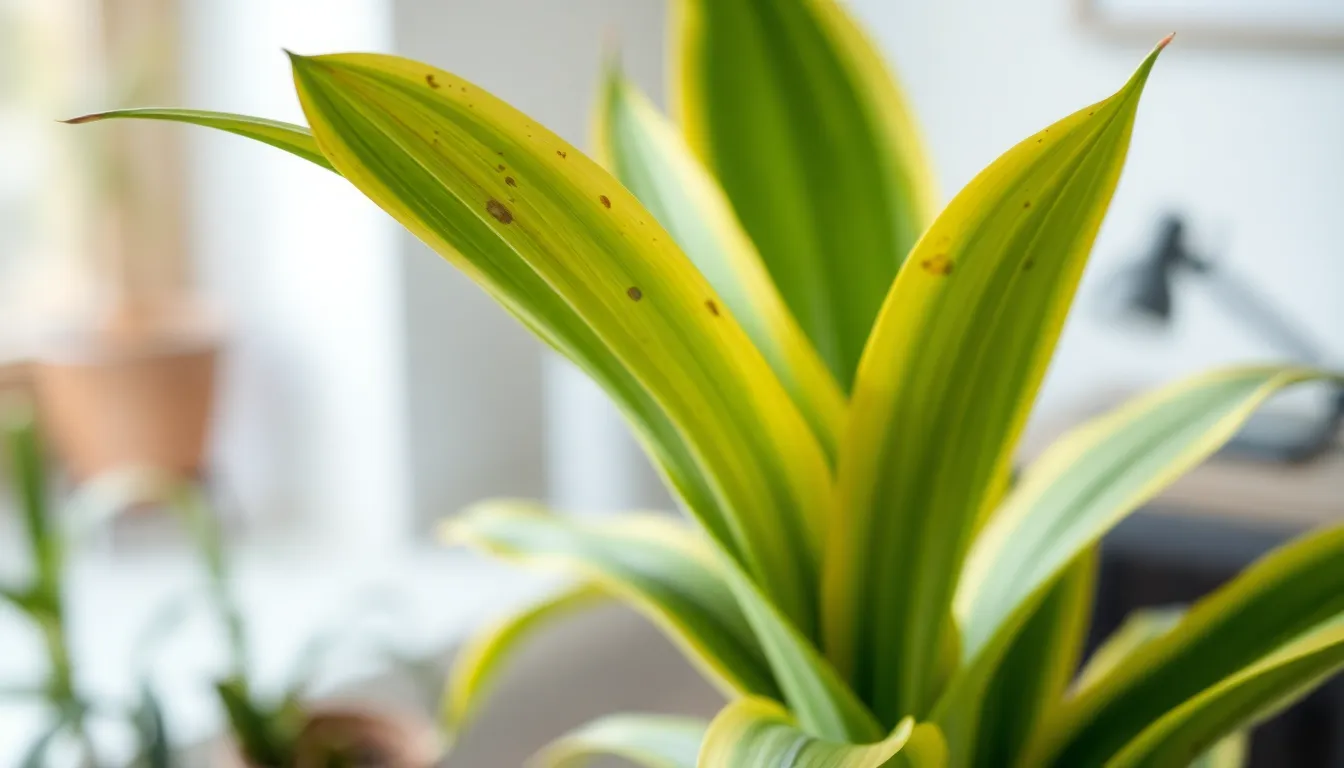
Images provide a valuable resource for diagnosing snake plant diseases. Pictures showcase specific symptoms such as discoloration, wilting, and spots. Recognizing mealybug infestations is easier through visuals, highlighting their cotton-like appearance on leaves. Fungal infections often display leaf spots that worsen over time. Pictures serve as a guideline, allowing owners to compare their plants to clear examples of disease.
Symptoms To Look For
Several symptoms may indicate problems in snake plants. Yellowing leaves often suggest overwatering or poor drainage. Wilting or drooping can signal root rot or inadequate moisture levels. Small white cottony masses indicate mealybug presence. Dark spots on leaves usually point to fungal infections related to excess moisture. Observing these signs helps owners detect issues early.
Preventive Measures
Preventing diseases in snake plants involves careful attention to plant care and environmental conditions.
Best Practices For Plant Care
Provide proper watering practices to avoid root rot. Allow the soil to dry between waterings, ensuring good drainage. Use pots with drainage holes, as this reduces the risk of standing water. Clean the leaves regularly to prevent dust buildup, which can hinder photosynthesis. Check for pests routinely, especially mealybugs, which can appear unnoticed. Fertilize during the growing season, but avoid over-fertilization to maintain a balanced nutrient level.
Environmental Factors Affecting Health
Consider humidity levels when placing snake plants. Low humidity can stress plants, leading to susceptibility to diseases. Ensure adequate air circulation around plants to minimize mold and fungal infections. Positioning snake plants in indirect light helps prevent sunburn, which occurs when exposed to harsh sunlight. Maintain a consistent temperature, as extreme fluctuations can cause stress and increase disease risk. Regularly monitor environmental conditions to create an optimal growing environment.
Treatment Options
Addressing snake plant diseases promptly enhances recovery chances. Understanding specific treatments proves beneficial in alleviating issues effectively.
Remedies For Specific Diseases
Root rot treatment involves removing the plant from the pot and inspecting the roots. Trim away any soft or dark roots, then repot the snake plant in fresh, well-draining soil. Utilizing fungicides assists in combating fungal infections, particularly leaf spots. Apply fungicide according to package directions after assessing damage. For mealybugs, a cotton swab dipped in alcohol cleans affected areas effectively. Encouraging dry conditions through improved air circulation prevents further outbreaks. Watering the plant only when the top inch of the soil is dry maintains optimal moisture balance.
When To Seek Professional Help
Seeking professional assistance becomes critical in persistent cases. If visible symptoms worsen despite treatment, a consultation may provide solutions. An expert assesses the plant’s overall health and identifies underlying issues. Growth stagnation, accompanied by yellowing leaves, often signals a deeper problem requiring intervention. Accessing local garden centers or extension services connects individuals with knowledgeable professionals. Expert evaluations offer tailored advice and potential treatments for complex infestations or diseases.
Conclusion
Understanding snake plant diseases is crucial for maintaining their health and vitality. By recognizing symptoms early and implementing preventive measures, plant owners can significantly reduce the risk of severe issues. Regular monitoring and proper care techniques ensure these resilient plants thrive in any environment.
Utilizing the provided images can aid in quick identification of problems, allowing for timely interventions. Whether it’s adjusting watering practices or addressing pest infestations, proactive management is key. With the right approach, snake plants can continue to beautify homes while remaining healthy and robust.


