


Roses are often dubbed the queens of the garden, but even royalty can fall victim to a few pesky ailments. From black spot to powdery mildew, rose plant diseases can turn a blooming beauty into a wilted wallflower faster than you can say “disease prevention.” If you think your roses are safe because they look pretty, think again—those charming petals might be hiding a secret life of struggle.
Rose Plant Diseases
Rose plants encounter several diseases that threaten their vigor and beauty. Black spot, a fungal disease, creates dark circular spots on leaves, often leading to premature leaf drop. Additionally, powdery mildew appears as a white powdery coating on foliage, hindering photosynthesis and weakening the plant.
Rust is another significant threat, characterized by orange or rust-colored pustules on leaves. These pustules disrupt nutrient absorption, impacting the plant’s growth. Downy mildew, manifesting as yellow spots on the upper leaf surface and a fuzzy growth below, loves moisture and thrives in humid conditions.
Fungal infections, such as root rot, often arise from overwatering or poor drainage, affecting the roots and causing wilting. Circumstances that favor high humidity and insufficient air circulation can exacerbate this problem. Aphids and spider mites contribute to plant stress by feeding on sap, further heightening disease susceptibility.
Preventative measures in rose care significantly reduce disease occurrences. Employing resistant rose varieties offers an ecologically sound approach while promoting overall health. Regularly pruning for air circulation and applying fungicides as needed curbs potential outbreaks.
Observing roses closely aids in early detection of issues. Recognizing symptoms quickly is vital for effective management, ensuring the longevity of rose plants. Integrated pest management, leveraging beneficial insects, balances disease control while reducing chemical dependency.
Common Diseases Affecting Rose Plants
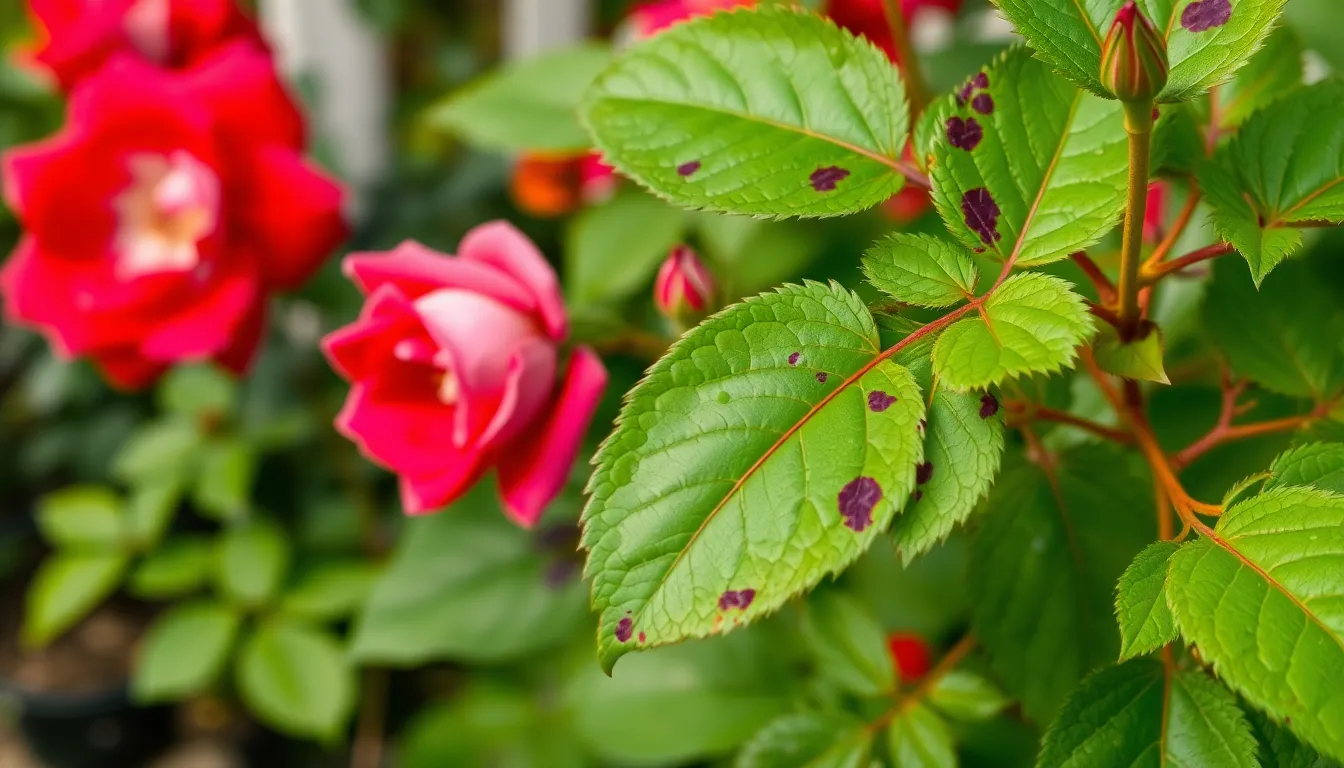
Several diseases commonly afflict rose plants, impacting their health and beauty. Identifying these issues early ensures effective management and care.
Fungal Diseases
Fungal diseases, such as black spot and powdery mildew, present significant challenges for rose growers. Black spot appears as dark spots on leaves, leading to yellowing and leaf drop. Powdery mildew manifests as a white powdery coating that restricts photosynthesis and stunts growth. Rust generates orange pustules on stems and leaves, resulting in leaf drop and reduced vigor. Additionally, downy mildew develops in humid conditions, causing dark patches on leaves. Proper air circulation and regular pruning help prevent these fungal infections.
Bacterial Diseases
Bacterial diseases often lead to severe damage in rose plants. Bacterial blight presents as watery spots that turn brown over time, ultimately causing wilting and dieback. Crown gall appears as swollen growths at the base of stems, which disrupts nutrient flow. Infected plants demonstrate stunted growth and poor flowering. Proper sanitation practices limit the spread of bacterial diseases, while resistant rose varieties can withstand these threats.
Viral Diseases
Viral diseases significantly impact the health of rose plants. Rose mosaic virus presents as yellow and green mottling on leaves, impairing photosynthesis and overall vigor. Another common virus, the rosenecrotic mosaic virus, causes leaf distortion and stunted growth. Infected plants may produce fewer blooms. Controlling aphid populations aids in preventing viral spread, as they serve as primary vectors. Quarantine new plants before introducing them to minimize virus transmission.
Symptoms of Rose Plant Diseases
Rose plants exhibit distinct symptoms that help identify underlying diseases. Observing these signs aids in early diagnosis and effective management.
Identifying Fungal Infections
Fungal infections often manifest through various symptoms. Black spot appears as dark circular spots on leaves, typically surrounded by yellowing tissue. Powdery mildew forms a white, fluffy coating on foliage, restricting photosynthesis. Rust presents as small orange or yellow pustules on leaves, leading to eventual leaf drop. Downy mildew thrives in humid conditions, resulting in fuzzy gray or purple patches on the undersides of leaves. Each of these symptoms signals a fungal problem that requires prompt attention for successful treatment.
Identifying Bacterial Infections
Bacterial infections show characteristic signs on rose plants. Bacterial blight results in dark, water-soaked spots on leaves, often leading to premature leaf drop. Crown gall can be identified by abnormal growths or galls on stems and roots, affecting overall plant vigor. Symptoms of these bacterial issues often develop rapidly, causing significant damage. Close monitoring and prompt identification remain vital for managing these bacterial threats effectively.
Identifying Viral Infections
Viral infections in roses can profoundly impact plant health. Rose mosaic virus causes irregular yellow and green patterns on leaves, often stunting growth. Rosenecrotic mosaic virus presents similar symptoms but typically leads to more severe plant decline. Infected plants often produce fewer blooms, diminishing aesthetic appeal. Watching for these visual signs allows for timely intervention, minimizing the spread of viral infections among susceptible plants.
Preventative Measures for Rose Plant Diseases
Preventative measures play a vital role in keeping rose plants healthy and vibrant. Implementing effective strategies minimizes the risk of disease.
Cultural Practices
Cultural practices promote robust rose plants. Selecting disease-resistant varieties enhances resilience against common diseases. Providing adequate spacing between plants ensures good air circulation, reducing humidity levels that favor disease development. Regular watering at the base of the plant prevents wet foliage, which can lead to fungal infections. Pruning dead or diseased stems encourages new growth and improves overall airflow. Applying mulch around the base can reduce weed competition, which decreases stress on the plants. Observers should routinely inspect leaves and stems for early signs of disease, allowing for prompt action.
Chemical Treatments
Chemical treatments offer additional protection against rose plant diseases. Utilizing fungicides can effectively control fungal infections like black spot and powdery mildew. Applying these treatments in early spring and during active growth phases ensures maximum effectiveness. Insects that transmit viruses, such as aphids, can be controlled using insecticidal soaps or systemic insecticides. Following the manufacturer’s recommended application rates is crucial to avoid harming beneficial insects. Regular treatment applications help maintain plant vigor and mitigate disease spread. Monitoring weather conditions also assists in timing applications to enhance their effectiveness.
Conclusion
Maintaining the health of rose plants requires vigilance and proactive care. By understanding the various diseases that can afflict these beautiful flowers, gardeners can take essential steps to prevent and manage issues effectively. Implementing cultural practices and using appropriate chemical treatments can significantly reduce disease risks.
Regular observation and early diagnosis are key to keeping roses thriving. With the right strategies in place, it’s possible to enjoy vibrant blooms and robust plants throughout the growing season. Embracing a comprehensive approach to rose care ensures that these garden queens continue to flourish despite the challenges they may face.


